Monday 02 / February / 2026
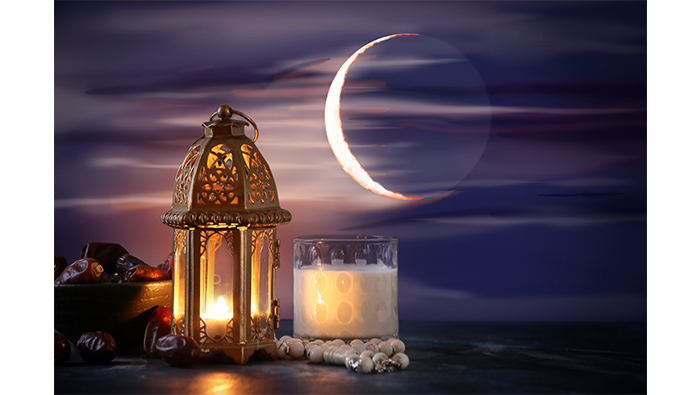
Muscat: The International Astronomical Centre (IAC) has announced that the holy month of Ramadan is expected to begin on Thursday, 19 February 2026, for most Islamic nations. While the official sighting for the crescent will take place on Tuesday, 17 February, astronomers emphasise that scientific data and current celestial alignments make a valid sighting on that evening virtually impossible.
According to the astronomical research, the conditions on Tuesday will not allow for a crescent sighting by any means—whether by the naked eye, telescopes, or advanced digital imaging. In most of the Arab and Islamic world, the moon will either set before the sun or so shortly after it that a visible crescent cannot form. To further confirm this, a solar eclipse will occur on Tuesday afternoon; this celestial conjunction provides tangible proof that the moon will not be visible for several hours following the event.
The IAC has also cautioned observers against false sightings on Tuesday evening. Experts warn that the planet Venus will be positioned near the moon’s expected location in the western sky, which often leads inexperienced observers to mistake the bright planet for the Ramadan crescent. Due to these definitive factors, countries requiring a confirmed physical sighting are expected to complete 30 days of Sha’ban, marking Thursday as the official start of the fast.
For countries including Pakistan, Bangladesh, Morocco, and Iran, which observe the moon a day later on Wednesday, 18 February, the first day of Ramadan will likely fall on either Thursday or Friday. Calculations for Wednesday indicate that the moon will be easily visible to the naked eye in cities such as Mecca, Abu Dhabi, Cairo, and Rabat, where it will remain in the sky for approximately an hour after sunset.
This scientific approach aligns with recommendations from major Islamic astronomical conferences, which suggest that there is no religious requirement to search for the moon in cases where science definitively proves its absence. Ultimately, the final declaration will remain subject to the official announcements of moon-sighting committees in each respective country.