Saturday 28 / November / 2026
Muscat: A desire to make education more accessible and inclusive inspired Faris Al Busaidi, a final-year student at The Sultan’s School (TSS), to develop a bilingual educational platform designed specifically for neurodivergent children.
Named Stellar, or Mumeyaz in Arabic, the platform uses artificial intelligence (AI) to create an adaptive learning experience that responds to individual learning needs, helping children learn at their own pace in a supportive and engaging environment.
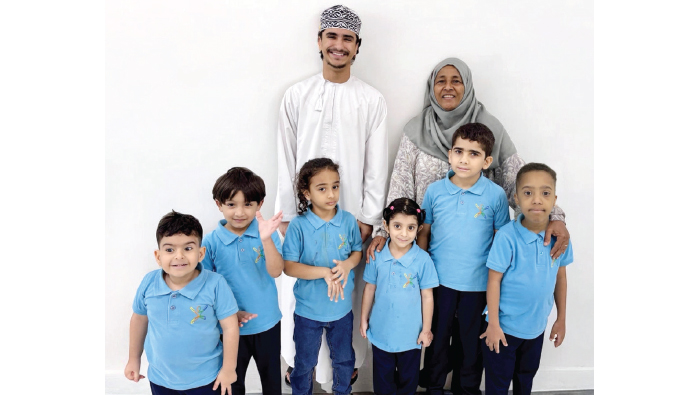
The idea took shape while Faris was volunteering at The Association of Early Intervention for Children with Disability, where he identified a shortage of tailored educational resources for children with diverse learning needs.
“Neurodivergent children often need a different kind of teaching, and most learning platforms treat every child the same. They also have very few learning options built for them, especially in bilingual settings. I wanted to build a platform that adapts to how each child learns at their own pace, so learning feels manageable instead of overwhelming,” Faris told the Times of Oman.
Determined to address this gap, Faris researched the learning requirements of children, particularly those with attention deficit hyperactivity disorder (ADHD), dyslexia and autism. He consulted professionals working in the field and conducted independent online research to understand the tools and features that would make the platform effective.
With no prior coding expertise, he taught himself programming and explored ways to integrate AI into the system, eventually developing a platform that combines personalised learning with tools to support teachers, parents and children.
Stellar is designed to involve teachers and parents in the learning process.
Teachers can plan classes, assign homework and monitor individual progress, while parents can communicate with teachers through an integrated chat facility and keep track of their children’s development.
Beyond its educational features, the platform incorporates a reward system to make learning enjoyable and encourage children to work independently. The approach is also intended to build confidence and support emotional well-being.
Faris successfully implemented Stellar on devices at the Association, where it received positive feedback from both teachers and students. He also visited the centre to train specialists in using the programme and spent time working directly with the children.
The initiative has since received international recognition, with Stellar selected as a finalist project by the Learning Planet Institute.
Sabah Al Bahlani, Chief Executive Officer of the Association of Early Intervention, said Faris’ contribution demonstrated how young people could use their skills and creativity to make a meaningful difference in their communities.
“It is important for young people to learn the value of giving back to their communities, and volunteering with NGOs is one meaningful way to do that. At the Association of Early Intervention, many students have the opportunity to contribute their skills to support children and their families,” she said.
Describing Faris’ initiative as an example of the positive impact young volunteers can make, Sabah highlighted his development of an educational platform that enables children to learn while having fun.
She added that projects of this nature help young people become more responsible, productive and socially aware, while developing their own skills and creativity. The Association encourages more young people to volunteer and contribute towards building an inclusive and caring society.
Faris’s commitment to inclusive education extends beyond the development of Stellar. As a UNICEF Youth Advocate, he is actively involved in promoting accessible education for children of all abilities and raising awareness about the importance of creating a society that accommodates diverse learning needs.
He recently participated in the Muscat Run to highlight the importance of inclusive education, bringing participants together in support of children with diverse learning needs and drawing public and media attention to the issue.
Outside his advocacy and technology initiatives, Faris is also a national team golfer, competing in regional and international championships. He actively encourages children to take up sports and offers complimentary golf lessons, highlighting the health benefits of physical activity and participation.