Monday 16 / November / 2026
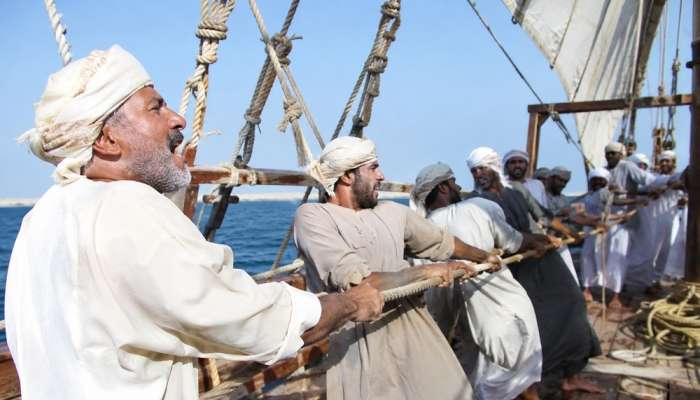
Beijing: The cities of Beijing and Shanghai in the People's Republic of China hosted the International Academic Conference on Safeguarding Intangible Cultural Heritage and its intergenerational transmission within the Belt and Maritime Silk Road Initiative.
The event saw the participation of more than 120 experts, researchers, and officials from academic and cultural institutions, including 65 researchers from outside China and 55 researchers from China, alongside nine teams that participated in its applied activities.
Dr. Ayat Nasser Al Mata'ani, Assistant Professor at the College of Arts and Social Sciences at Sultan Qaboos University, serving as an invited keynote speaker, presented a scientific research paper on the Omani "Nahham" (traditional maritime chanter) and the sustainability of intangible cultural heritage along the Maritime Silk Road.
The paper was based on the testimonies of five practitioners and narrators, drawing on oral history, semi-structured interviews, participant observation, and audiovisual recording.
The researcher proposed a framework for analyzing the sustainability of this practice through five interconnected aspects, which include learning and knowledge transfer, practitioners and their communities, performance contexts and meanings, places along with organization and support, and means of documentation and circulation.
The paper highlighted a primary finding represented by the continuation of the "Nahham" practices and their transition from the maritime work environment to national and social festivals and occasions, while retaining the call-and-response structure led by an individual and answered by the group.
The researcher addressed the mutual relationship between the Maritime Silk Road and intangible cultural heritage, clarifying that the call-and-response traditions contributed to organizing the collective effort associated with rowing, pulling ropes, and raising the anchor. Thus, these practices performed a practical function during maritime voyages, while the voyages contributed to the transmission of vocabulary, experiences, and practices among communities.
The paper presented the survival of Swahili phrases in some performances in Sur as evidence of the impacts of this communication, along with an analysis of how these elements acquired local meanings through usage and inheritance.
The paper also highlighted the importance of the Maritime Silk Road as an arena for encounter and knowledge exchange, and the importance of intangible cultural heritage as part of the knowledge and skills that contributed to the accomplishment of maritime works.
This relationship provides a foundation for understanding historical communication through people's daily experiences and practices, as well as for developing contemporary cooperation that employs those experiences in the fields of research, education, and knowledge transfer.
The researcher noted the importance of documenting the practice as an integrated system that combines text, sound, movement, work, and social context.
She also presented a documentation model encompassing audiovisual recording, the text as performed, an explanation of maritime and Swahili terminology, and a description of movement, alongside a card introducing the practice and another describing its performance. The applied value of this model lies in the possibility of utilizing it in training and education, thereby contributing to linking the performance with its meanings and associated knowledge.
The paper also touched upon a comparison between these practices and the work chant traditions among groups of fishermen and navigators in China, based on the similarities in certain functions and the call-and-response structure, as well as the challenges resulting from changing work patterns.
This comparison provides room for exchanging safeguarding experiences, while emphasizing that proving a direct historical transmission of a specific practice requires additional evidence that goes beyond functional similarities.
The researcher proposed a course of action starting with expanding the scope of documenting the testimonies of the older generation of sailors, developing a digital archive and a glossary of terms, organizing workshops led by experienced practitioners, and integrating knowledge related to maritime heritage into educational curricula.
She also put forward a vision for establishing a cooperation network among the Sultanate of Oman, China, and East Africa, based on joint documentation, exchanging practitioners, and implementing training programs, alongside reviewing the impact of these activities on the continuity of learning and practice.
These steps fall under the developmental proposals included in the paper, without representing a declared commitment to fund them.
The researcher affirmed the importance of directing the benefits of heritage safeguarding projects to the communities that carry and transmit it, and ensuring the participation of experienced individuals in decision-making and educating new generations. The paper concluded that the sustainability of intangible cultural heritage is not limited to the continuation of the practice itself, but is rather linked to the survival of the knowledge system and the relationships that give it meaning. It also concluded that the historical ties among the communities of the Maritime Silk Road offer broader opportunities for practical cooperation combining documentation, education, and community participation.




