Sunday 13 / September / 2026
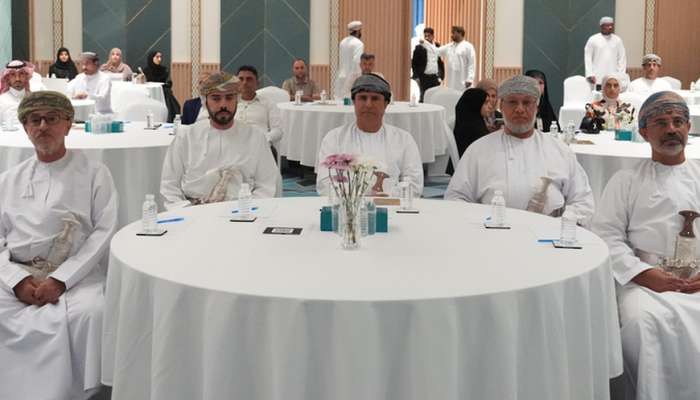
Muscat: The regional workshop on “Molecular Breeding and Marker-Assisted Selection”, which commenced on Sunday in Muscat and continues until 24 September, discussed enhancing scientific and technical cooperation and exchanging expertise in modern plant breeding technologies.
The workshop, held under the auspices of Dr. Ahmed Nasser Al Bakri, Undersecretary of the Ministry of Agriculture, Fisheries and Water Resources for Agriculture, seeks to build national and regional capabilities in utilising molecular technologies and genetic markers in genetic improvement programmes, thereby contributing to developing agricultural production and elevating its capacity to confront environmental and climatic challenges.
Organised by the Ministry of Agriculture, Fisheries and Water Resources, represented by the Directorate General of Agriculture and Livestock Research, in cooperation with the International Atomic Energy Agency (IAEA) and the Food and Agriculture Organization of the United Nations (FAO), the workshop includes lectures, practical applications, and specialised training in the fields of molecular breeding and marker-assisted selection, thereby enhancing participants’ knowledge and skills, and paving the way for exchanging expertise and experiences among specialists and researchers from participating countries.
Dr. Al Ghalia Hamid Al Maamari, Director of the Tissue Culture and Biotechnology Research Centre, said that organising this regional meeting comes as a result of constructive and continuous cooperation, underscoring the importance of international partnerships in supporting scientific research and developing capabilities in modern agricultural technology fields.
She added that food security and the sustainability of the agricultural sector represent the forefront of shared developmental priorities in light of the accelerating climatic and environmental challenges facing the world, most notably drought, rainfall fluctuations, soil degradation, and limited freshwater resources, alongside increasing pressures resulting from the spread of plant pests and diseases.
She pointed out that these challenges necessitate adopting a scientific and innovative approach based on deploying advanced biotechnologies, with the aim of enhancing the resilience and productivity of agricultural systems and securing communities’ needs for strategic and staple food crops.
She noted that mutation breeding programmes represent one of the effective and proven strategic solutions for improving agricultural crops and achieving qualitative advances in their quantitative, productive, and qualitative traits. She explained that mutations, whether spontaneous or laboratory-induced using physical mutagens—including radiation within the framework of peaceful nuclear technologies—or chemical mutagens, represent an important foundation for generating and expanding the base of genetic variation in plants.
She pointed out that this variation allows for the development and introduction of new and desirable genes and traits, enabling plants to withstand harsh environmental conditions, adapt to the impacts of climate change, and resist agricultural pests, particularly in staple cereal crops like wheat and barley, alongside crops of local economic importance.
She stated that utilising genetic markers allows for screening plant genetic material and precisely selecting successful and promising mutations, rather than relying on waiting years for desired traits to manifest phenotypically and stabilize across generations, thereby contributing to reducing research time and effort and accelerating access to improved varieties.
She concluded by emphasising that the integration between mutation breeding technologies, molecular techniques, and marker-assisted selection represents a promising approach to accelerating the production of improved agricultural varieties and transferring them efficiently and rapidly to farmers’ fields, thereby supporting food security and boosting the resilience of agricultural systems against global food crises and supply chain disruptions.
The workshop aims to highlight the integration of molecular breeding techniques and marker-assisted selection with mutation breeding programs, as precise diagnostic tools enabling the identification of genetic changes and the selection of promising mutations at early stages of plant growth.
-ONA