Tuesday 18 / August / 2026
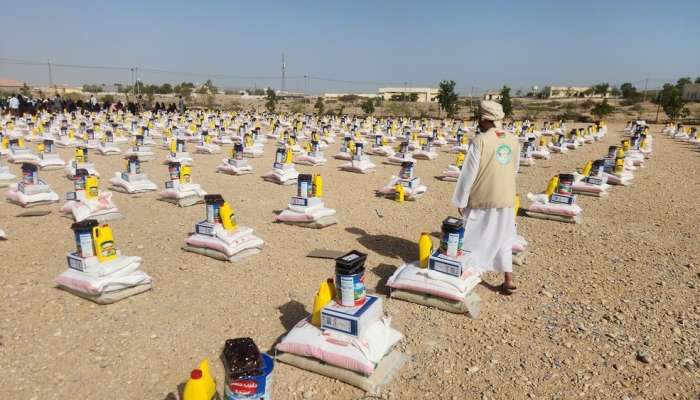
Muscat: The Sultanate of Oman will join nations around the world tomorrow “Wednesday” in observing World Humanitarian Day, reaffirming its active presence and enduring contributions to supporting humanitarian efforts. This commitment is rooted in its firm belief that solidarity, mutual support and standing by people in times of crisis are deeply ingrained values and an enduring extension of Omani society.
This approach is embodied in the swift response to various humanitarian issues and circumstances, and the provision of aid and relief to those in need—reflecting an Omani paradigm in which assistance transcends its material value to carry a humanitarian message founded on compassion, peace, cooperation and solidarity among peoples.
Badr Mohammed Al Zaabi, Acting CEO of Oman Charitable Organization (OCO), told Oman News Agency (ONA) that World Humanitarian Day serves as a reminder that regardless of the causes and locations of crises, the human being remains the focal point and ultimate purpose of any response. In a world witnessing escalating conflicts, disasters and humanitarian challenges, no single country or institution can operate in isolation, he affirmed.
He emphasized that international solidarity, the integration of efforts and the rapid delivery of aid to those entitled to it have become shared responsibilities. He further affirmed that Oman's message is that humanitarian action should not be governed by geography or differences, but rather by human need, respect for human dignity and the extension of assistance at the time it is most needed.
He added that the Sultanate of Oman possesses a deeply rooted humanitarian approach, drawing its strength from a foreign policy based on peace, cooperation and mutual respect—a stance reflected in its regional and international humanitarian presence. What distinguishes this approach, he said, is its quietude and continuity, its focus on the humanitarian dimension and its commitment to reaching affected populations wherever they may be. Oman is keen to ensure that its aid is aligned with actual needs, transitioning from emergency response in times of crisis to supporting recovery and stability whenever feasible.
He explained that the Omani experience is built upon a critical equation: responding to immediate needs without overlooking the long-term requirements of individuals. Omani efforts combine urgent relief assistance with health, educational, housing and developmental programmes, thereby contributing to more sustainable impact. Omani humanitarian action is, by its nature, discreet, prioritizing the impact that reaches people over the accompanying visibility.
Regarding the launch of Oman Red Crescent and its significance for the development of the national humanitarian system, the Acting CEO of Omani Charitable Organization described it as a pivotal milestone in advancing the national humanitarian framework. This is achieved by introducing a specialized institutional structure that enhances Oman's preparedness and capacity to respond to crises and disasters, while opening broader horizons for volunteering, capacity-building and humanitarian cooperation, he pointed out.
He added that this step gains additional importance from the fact that Oman Red Crescent falls within the purview of Oman Charitable Organization and operates under its management, thereby preserving the Organization’s accumulated expertise and reinforcing integration in the management of humanitarian action.
On the external front, Oman Red Crescent represents a significant advancement in organizing and expanding Oman's humanitarian presence, strengthening its relationships and partnerships with the international humanitarian system, and showcasing and institutionalizing the aid and humanitarian efforts that Oman provides across various regions of the world within a more prominent and integrated institutional framework.
He stated: "We aspire for Oman Red Crescent to serve as an active humanitarian arm within Oman Charitable Organization’s system, and to enhance the Sultanate of Oman's capabilities in humanitarian response, emergency management and disaster relief—through capacity-building, field team training, the development of volunteer work and raising the level of preparedness and readiness for crises."
He further observed that one of the key roles of Oman Red Crescent is to serve as a trusted humanitarian bridge and a platform for coordination and cooperation with international humanitarian institutions and organizations that view the Sultanate of Oman as a reliable partner through which humanitarian efforts and assistance can be facilitated to reach regions and countries affected by crises and conflicts. Oman's consistent approach, balanced relations and humanitarian stances have contributed to building this trust—a valuable asset that can be built upon and developed in the forthcoming phase.
He affirmed that the establishment of Oman Red Crescent represents an important step in strengthening the connection between Oman's humanitarian action system and the International Red Cross and Red Crescent Movement and international humanitarian organizations. While cooperation and coordination with many of these institutions have existed for years, the presence of Oman Red Crescent will provide these relationships with a more institutional and structured framework, opening broader avenues for developing partnerships, exchanging expertise and knowledge, and building capacities in disaster and crisis response, as well as volunteer and humanitarian work, he added.
He explained that practical steps have already been initiated in this direction, through a number of coordination meetings with relevant stakeholders to discuss areas of cooperation, priorities objectives, and establish the foundations for the next phase. These efforts aim to build effective and sustainable partnerships and facilitate mutual benefit from expertise and capabilities. He noted that these partnerships are viewed as reciprocal relationships that allow Oman to benefit from international expertise and experiences, while in turn contributing its own accumulated humanitarian experience, balanced relationships and international credibility, as well as its potential role in supporting and facilitating humanitarian efforts in crisis-affected regions. Oman Red Crescent represents an institutional extension that reinforces Oman's presence, partnerships and impact within the international humanitarian action system.
Regarding the most prominent humanitarian initiatives and programmes implemented by the Organization during the recent period, both domestically and internationally, and their impact on beneficiary communities, Badr Mohammed Al Zaabi, Acting CEO of Oman Charitable Organization, stated that the Organization continues to implement its humanitarian programmes within the Sultanate of Oman and abroad, with a focus on ensuring that aid reaches its intended beneficiaries and achieves direct and sustainable impact on their lives.
He noted that at the domestic level, the Organization’s programmes benefited more than 46,000 individuals across various governorates of the Sultanate of Oman during the first half of 2026, through an integrated package of programmes including food assistance, orphan sponsorship, cash aid, educational, medical, and housing support, in addition to emergency relief response.
He pointed out that at the international level, the Organization’s efforts during the same period extended to a number of countries, encompassing diverse humanitarian interventions tailored to each country's needs, including relief and medical assistance, educational support, orphan sponsorship, and a range of other humanitarian programmes and projects. He emphasized that the success of humanitarian action is measured not only by the volume of what is provided, but by its ability to alleviate human suffering, empower individuals to overcome the circumstances they face, and generate an impact that extends to their lives, families and communities.
He added that the Organization has expanded its relationships and partnerships with national institutions and regional and international humanitarian organizations, driven by the conviction that addressing major crises requires the integration of capacities, expertise and resources, rather than operating in isolation.
Concurrently, efforts are underway to develop human and field capacities, strengthen the humanitarian action system, and enhance coordination and preparedness, particularly with the launch of Oman Red Crescent—contributing to the establishment of a humanitarian system that is more prepared, flexible, and capable of responding efficiently and swiftly to future changes and crises.
With regard to the contribution of partnerships with the private sector and civil society institutions in expanding the impact of Omani humanitarian initiatives, he affirmed that humanitarian action is a shared national responsibility, and its impact multiplies when the efforts of government, the private sector, civil society institutions, and individuals are integrated. Over the past period, the Organization has successfully built a close relationship with private sector institutions, most notably through the "20% Corporate Social Responsibility" initiative, which mandates the allocation of no less than 20% of corporate social responsibility budgets to the Organization. He noted that significant commitment and cooperation from companies have been observed in this regard.
He explained that the Organization channels these contributions to eligible beneficiaries through its humanitarian and social programmes and projects, in line with priorities and needs. This partnership has brought about a significant transformation in enhancing the sustainability of aid and expanding its scope of impact.
He indicated that Oman Charitable Organization has entered a new phase of institutional development through the implementation of its comprehensive development plan for 2026–2028, which aims to build a more efficient, sustainable, and adaptive operational system capable of keeping pace with the rapid transformations in humanitarian action—moving from the isolated development of services and programmes to an integrated development encompassing various aspects of institutional and humanitarian work.
He stated that priorities for the upcoming phase focus on accelerating digital transformation and electronic service integration, enhancing the beneficiary experience, strengthening community partnerships, entrenching governance and transparency, investing in human capital, enhancing financial sustainability and diversifying funding sources, in addition to developing high-impact projects and programmes with sustainable humanitarian outcomes.
It is noteworthy that World Humanitarian Day is observed on 19 August each year, serving as a global occasion to highlight humanitarian efforts worldwide, honour the sacrifices of humanitarian workers, and reaffirm the importance of solidarity and international cooperation in addressing crises and disasters.