Tuesday 14 / July / 2026
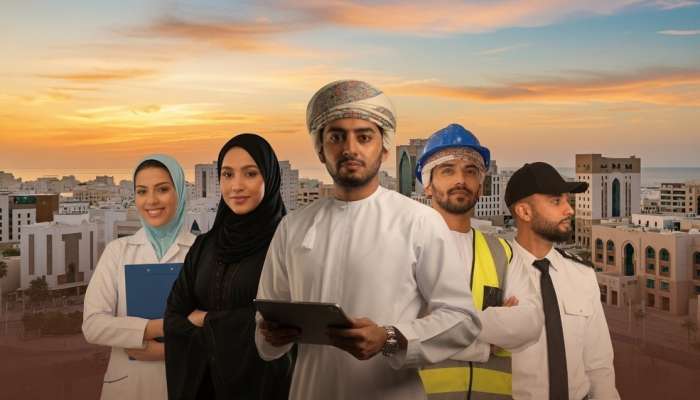
Muscat: The Sultanate of Oman will join countries around the world on Wednesday in observing World Youth Skills Day, as part of international efforts to empower young people and equip them with the skills needed to navigate rapid labour market transformations.
This year's observance, under the theme "Skills for a Shared Future," highlights the urgent need for innovative youth skills development programmes and initiatives that enable young people to lead change, build bridges across cultures, and contribute meaningfully to a more sustainable and inclusive future.
Oman's commitment to investing in youth skills is reflected in national programmes implemented by the Ministry of Culture, Sports and Youth, tailored to enhance young people's readiness for future demands and enable their contribution across development sectors.
Hilal bin Saif Al Siyabi, Director General of Youth at the Ministry of Culture, Sports and Youth, said youth skills development programmes have helped prepare national competencies equipped with the skills and knowledge needed for effective participation in national development and innovation.
He added that the "Mustaid" programme, one of the ministry's flagship initiatives, focuses on developing future, life and leadership skills through experiential learning in a non‑traditional training environment. Since its launch in 2022, it has reached more than 2,700 young people, with 90 percent of participants confirming the programme contributed to developing their practical or personal skills, and an average impact of 80 percent.
He pointed out that the "Youth Ambassadors" project has helped prepare young national leaders capable of representing Oman internationally by equipping them with diplomatic and leadership skills through specialised training, UN simulation sessions and meetings with diplomatic leaders. The project has seen steady growth in participation, with four graduates attending the UN Economic and Social Council's Global Youth Forum in New York — a positive sign of its success.
Youth initiatives have also fostered entrepreneurship, innovation, volunteerism and community participation, helping to refine young people's capabilities, develop their sense of responsibility and enable them to offer innovative solutions. The annual support these initiatives receive reflects the ministry's commitment to programmes that serve society, Al Siyabi said.
These efforts reflect the ministry's direction towards investing in youth human capital and building a generation equipped with the skills, knowledge and values needed to contribute effectively to Oman Vision 2040, he added.
He told Oman News Agency (ONA) that the growing interest of Omani youth in acquiring future skills is a positive indicator of rising awareness about the need to prepare for rapid global transformations, including technological and digital advances, economic shifts, and evolving job market demands.
“Young Omanis are responding consciously to these changes, seeing them as an opportunity to build a generation better equipped for adaptation and innovation,” Hilal Al Siyabi said.
He added that the “Youth and Future Skills” project, recently launched by the ministry, aims to study and develop youth skills, prepare them for the labour market, and help them anticipate future skills and jobs in vital sectors.
The initiative helps young people acquire critical and creative thinking, problem‑solving, continuous learning, and digital and technical skills — enhancing their ability to seize emerging opportunities and compete in changing work environments, Al Siyabi said.
Is’haq bin Saud Al Manji, Director of Relations and Partnerships at the Youth Centre, said investing in youth skills is essential for a sustainable future, and that anticipating emerging skills is central to the centre’s programme design. Programmes are built on the actual needs of young people, aligned with Oman Vision 2040 priorities.
The centre works with partners to launch strategic programmes that enable young people to acquire future skills early, boosting their competitiveness and innovation in priority sectors, Al Manji added.
The centre uses international benchmarks such as the Global Youth Development Index and the Global Innovation Index to monitor skills gaps and measure programme impact, ensuring continuous alignment with global trends.
Strategic partnerships with public and private institutions are key to anticipating future skills and ensuring programmes remain relevant to Oman Vision 2040’s knowledge‑ and innovation‑driven economy, he said.
The centre’s goal is not only to equip young people with today’s skills but to prepare a generation capable of adapting to change, anticipating future demands, and playing an active role in development, Al Manji concluded.
Omani youth continue to acquire future skills, recognising their role in shaping professional and academic ambitions, building competitive capabilities to meet labour market demands, and strengthening their presence in promising sectors.
Ola Mohammed Al Mutawa, an operations engineer in satellite systems at Oman Lens, said acquiring skills enables young people to identify their interests and discover their strengths, enhancing their awareness of their creative potential. This generates an inner drive and a clear goal aligned with those skills, directly reflected in the achievement of their professional and social aspirations.
Awareness of one's abilities and skills facilitates the choice of paths and roles that suit individual potential, increasing productivity and helping make more informed decisions, she added.
On the skills that guided her ambition to work in space physics, she highlighted self‑learning and the ability to apply knowledge gained through research and study to practical work. Continuous learning, she said, is essential for success in the space sector — a constantly evolving field that requires professionals to stay updated and apply the latest developments.
Young people's acquisition of advanced scientific skills represents a knowledge asset that serves national development priorities in scientific innovation, she noted. The presence of Omani youth in vital sectors is a long‑term investment in economic diversification, building a knowledge‑ and innovation‑based economy, enhancing the competitiveness of national competencies, and strengthening their capacity to lead technological transformations and develop innovative solutions to future challenges.
Ali bin Salim Al Busaidi, founder of "Mus'ef for Business," said that innovation is no longer merely a new idea, but has become a way of thinking and a responsibility towards the challenges facing society. He stressed that invention goes beyond innovative thinking alone, requiring the transformation of an idea into a practical solution and a viable product that can be applied and effectively utilised.
Innovation skills are reshaping the ambitions of Omani youth by enabling them to see themselves as opportunity creators rather than job seekers, he said. They possess numerous ideas across fields such as technology, energy, services, health, safety, education and the environment that can be turned into real projects.
An idea alone is insufficient; young people must have the ambition to turn their ideas into tangible reality by establishing innovation‑based start‑ups. This begins with studying the problem, understanding market needs, building a prototype, testing and developing the product, and ultimately finding the right partnerships, funding and licences, Al Busaidi explained.
The modern economy relies not only on natural resources but also on ideas, skills, technology, research and development, and the ability to convert knowledge into applicable products, services and solutions, he noted.
Oman's shift towards a knowledge‑based economy has made scientific research and innovation a national priority, as key drivers of sustainable development, competitiveness and integration between universities, government institutions and the private sector. This ensures that research is linked to market and societal needs, and that skills and knowledge are transformed into real economic and social value, he said.
Al Busaidi further said that the skills of Omani youth are a fundamental element in this transformation, due to their ability to learn quickly, embrace new technologies and experiment with different ideas. These qualities qualify them to be researchers, inventors, innovators, entrepreneurs and leaders of impactful start‑ups.
He concluded that the success of innovation is not measured by the number of ideas or awards alone, but by the extent to which these ideas are able to reach the ground and make a tangible difference.
The growing interest of Omani youth in studying and researching artificial intelligence is not a passing trend but a genuine indicator of a shift in how a broad segment of young Omanis view their professional future, said Malak Majid Al Amri, an AI researcher at Sultan Qaboos University.
Rather than being passive consumers of technology, they are becoming active participants in understanding, developing and applying it to solve real‑world problems, she said. This shift is reshaping ambitions from seeking traditional employment to embracing innovation skills and technological entrepreneurship.
Omani youth awareness of the importance of acquiring future skills has seen a notable leap in recent years, evident in the growing demand for professional digital courses, online programmes, technical initiatives and AI‑related research, she added.
She explained that contributing factors include the widespread integration of AI tools into daily and academic life, support from Omani government and academic institutions through training and research grants, the influence of digital learning communities, and young people's recognition that the job market requires skills beyond traditional specialisations — including analytical thinking, data handling and a deep understanding of emerging technologies.
On her own research journey, Al Amri said: "My interest in AI was not coincidental, but the result of observing that students used AI tools daily, yet there were insufficient local studies explaining why some embrace these tools while others hesitate. This research curiosity led me to study the determinants of AI tool usage among higher education students in Oman."
The experience refined her skills in designing research tools and analysing quantitative data using structural equation modelling (PLS‑SEM) — a skill she also applied to a study on higher education students' behavioural intention to use metaverse technology. Moving between AI and the metaverse deepened her understanding of how Omani youth interact with emerging technologies, she said.
Scientific research not only helps understand reality but also supports decision‑makers in shaping educational and technological policies, ensuring responsible and effective AI deployment, improving research efficiency, and enhancing graduates' readiness for future labour market needs, Al Amri added.