Sunday 12 / July / 2026
Ibri: Al Dhahirah Governorate is emerging as a promising model in attracting investment and implementing high‑quality agricultural, livestock and fisheries projects, driven by close coordination between government entities and the private sector and a clear vision to maximise local production through modern technologies.
The governorate is witnessing accelerated activity through an integrated portfolio of ongoing projects, others completed during 2025, and future projects planned for 2026.
Dr. Talal bin Zahran Al Busaidi, Director General of Agriculture and Water Resources in Al Dhahirah Governorate, said the governorate’s significance extends beyond its agricultural base. It possesses the resources to become an integrated economic hub for food production, built on natural assets, diverse activities and significant infrastructure development in recent years, in line with Oman Vision 2040, cementing its position as a key pillar of the food security system and sustainable development.
In a statement to the Oman News Agency (ONA), he said the governorate is steadily advancing towards greater competitiveness by maximising the added value of its resources, attracting quality investment and fostering a business environment conducive to sustainable development.
The governorate is rich in strategic resources, including fertile agricultural land, available water resources, agricultural expertise, production diversity and a strategic location that opens wide access to regional markets and supports the expansion of food industries and logistics, he noted.
Government services — including agricultural extension, veterinary care and various support programmes — are a fundamental pillar in ensuring the success and sustainability of investment projects, he said. The total number of investment projects in food security in Al Dhahirah has reached 67 across three wilayats, covering about 9,607 acres, with an investment value of OMR84 million, including the recently signed poultry project with A'Namaa valued at OMR28.85 million.
Ibri accounts for the largest share with 38 investment projects, while Dhank is distinguished as the governorate's food basket, with promising investment projects supporting self‑sufficiency and economic diversification for 2026, he said.
The Directorate is working to achieve its 2026 targets with an investment value ranging between OMR37.5 million and OMR50 million by introducing new investment opportunities alongside high‑quality projects spanning plant, animal and aquatic sectors, supporting production expansion, resource diversification and food security, Dr. Al Busaidi added.
The introduction of such projects supports the Ministry of Agriculture, Fisheries and Water Resources' targets of localising the second billion and enhancing self‑sufficiency rates towards a more sustainable and competitive food system, he said.
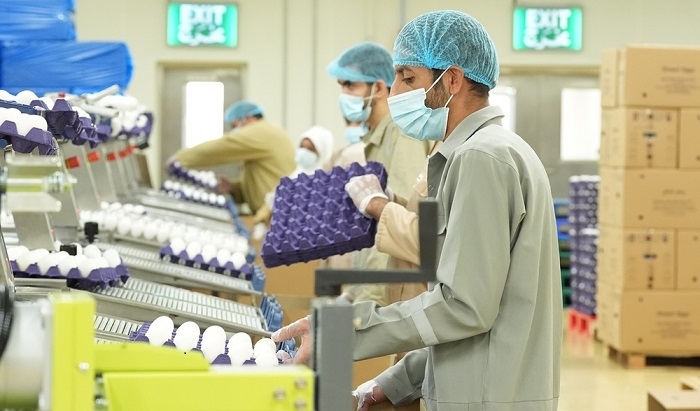
Ibri is witnessing a wide range of projects covering agricultural, livestock, manufacturing and service activities, including greenhouse vegetable production, date palm cultivation and date production, fodder projects, livestock and poultry farming, as well as specialised projects such as tissue culture laboratories, water bottling plants, and integrated projects combining agricultural and livestock production. These contribute to improving food supply chain efficiency and added value, alongside fertiliser production, veterinary hospitals and table egg production.
Dhank continues to diversify its agricultural investments through ten projects spanning plant, manufacturing and service activities, including date palm cultivation and date production, onion, potato, garlic and vegetable production, food manufacturing, animal waste utilisation, livestock farming and table egg production.
Yanqul is implementing nine diverse investment projects covering plant production, livestock, food manufacturing and support services, including grape and fig cultivation and production, date palm cultivation and date production, livestock farming and fodder cultivation, along with support projects such as fish market management and operation, and water purification and bottling.
The Director General stressed that the next phase requires a shift from increasing production to building integrated value chains — from agricultural production through sorting, packaging, storage and manufacturing to marketing and export.
Expansion in food industries, packaging and storage centres, fodder projects, and dairy and meat plants is a strategic direction to increase added value and enhance the sector's contribution to the national economy, he said.
He added that the governorate still abounds with multiple investment opportunities, including grain and strategic crop production, smart agriculture, fodder manufacturing, livestock farming, food industries, storage and refrigeration centres, agricultural services, water resources projects and logistics services.
Dr. Al Busaidi noted that 36 new projects have been listed on the Tatweer platform in collaboration with the Directorate General of Housing and Urban Planning for 2026, most notably the establishment of a veterinary hospital, a tissue culture centre, greenhouses, livestock projects, and carbonated and flavoured water plants.
Cooperation has also been established with specialists in the Ibri Industrial City (Madayn) to offer 11 investment opportunities in food manufacturing and organic fertilisers on the Tatweer platform.