Monday 06 / July / 2026
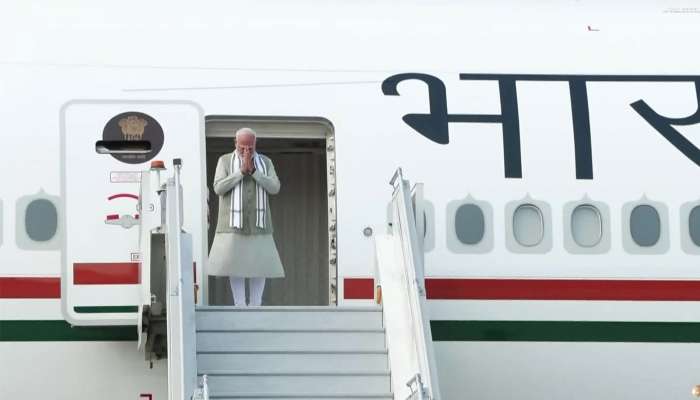
New Delhi: Indian Prime Minister Narendra Modi's visit to Indonesia is expected to focus on strengthening economic ties, even as bilateral merchandise trade has declined over the past three financial years.
According to a Rubix Data Sciences trade outlook report, bilateral goods trade fell from USD 38.8 billion in FY2023 to USD 24.8 billion in FY2026.
Trade and investment are expected to be key areas of discussion during Prime Minister Modi's July 6-11 visit to Indonesia. The visit follows the 8th India-Indonesia Joint Commission Meeting held in New Delhi last month.
The report said overall bilateral goods trade registered a compound annual growth rate (CAGR) of minus 14 per cent during the period, mainly due to falling exports and moderating imports.
India's exports to Indonesia declined from $10 billion in FY2023 to $4.5 billion in FY2026, recording a CAGR of minus 23 per cent.
"India's goods exports to Indonesia fell from $10 billion (FY2023) to $4.5 billion (FY2026), more than halving over the period, with a steep CAGR of -23%, reflecting sustained export weakness," the report said.
Imports from Indonesia also declined, falling from $28.8 billion in FY2023 to $20.3 billion in FY2026, at a CAGR of minus 11 per cent.
"Imports from Indonesia declined from $28.8 billion to $20.3 billion, with a CAGR of -11%, indicating that import demand has also fallen but at a relatively slower pace than export demand," the report added.
The report said India's trade deficit with Indonesia narrowed from $18.8 billion in FY2023 to $15.8 billion in FY2026, although the imbalance remains significant.
Despite the decline in trade, Indonesia remains one of India's key economic partners in Southeast Asia. ASEAN accounted for around 11 per cent of India's total merchandise trade in FY2026, with Indonesia remaining India's second-largest merchandise trading partner within the bloc.
The report said the Joint Commission Meeting held in June 2026 focused on expanding cooperation in trade, maritime security, defence, digital connectivity, health and critical minerals.
It also noted changes in the composition of bilateral trade. India's exports to Indonesia have become more diversified, with the share of refined petroleum products declining, while exports of frozen bovine meat, auto components, groundnuts and unmanufactured tobacco have increased.
The report said India's export basket is gradually shifting from energy products towards agricultural and industrial goods.
On the import side, coal and palm oil continued to dominate India's imports from Indonesia. Indonesia remained India's largest supplier of palm oil, accounting for around 40 per cent of India's palm oil imports in FY2026, while imports remained largely commodity-driven despite gradual diversification, the report said.