Monday 06 / July / 2026
ZL Group is investing to turn Oman from a market for enhanced oil recovery into a production and knowledge base — and a regional hub serving the wider Gulf.
Enhanced oil recovery (EOR) has long been treated by the industry as a product to be imported and a problem to re-solve field by field. ZL Group is setting out to change that in Oman. With an established plant in Salalah and a new facility taking shape at SOHAR Port, the company is pursuing what it calls an industrialization pathway: not a single factory, but an entire value chain the Sultanate can own.
“For us, enhanced oil recovery is not a single facility or a product we import and sell,” says ZL Group CEO Echo Liu. “It is a full value chain that Oman can own. Salalah proved the model. Sohar is the next step. Together they signal that Oman is moving from being a market for EOR to becoming a production and knowledge base for it.” That direction sits squarely within the in-country value and self-reliance goals set out by the Ministry of Energy and Minerals, and within the broader ambitions of Oman Vision 2040.
ZL’s long-term objective is a fully integrated, 100% made-in-Oman EOR value chain, from raw materials and monomer production through to finished polymer products, laboratory services, field application and technical support. The localization runs deeper than manufacturing: the company is building laboratory and R&D capability, equipment supply and field-service teams in-country, so that formulations are developed and tested against the region’s reservoir conditions and applied by local people. It is also adding conformance-control technology, completing the offering for the many water-flooded fields across the GCC where channelling and poor sweep efficiency persist.
Each layer — R&D, manufacturing, quality control, equipment, maintenance, spares, conformance control and surface support — represents a capability and a set of jobs that stays in Oman. Equally important is the expertise built over more than a decade of operations, alongside local operators and service providers, in Omani reservoir conditions, manufacturing and logistics.
The chemistry at the core is polyacrylamide, which in the GCC is applied overwhelmingly to oil recovery. Used in EOR, it increases oil production while cutting the carbon footprint by more than 50% compared with conventional water flooding. The foundations were laid in Salalah, where ZL commissioned its first plant in 2019. It has supplied the Marmul oil field for the past seven years, with a 100% qualification and on-time delivery record.
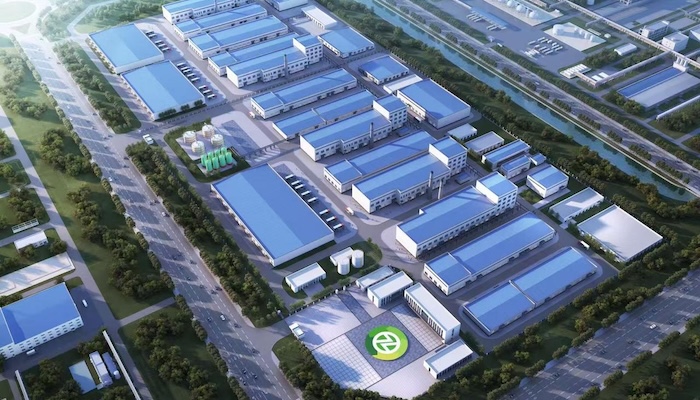
The scale of Sohar reflects the ambition. Land was secured in December 2023, ground was broken in December 2024 and installation was completed in February 2026. The facility spans 24 hectares, with more than 129,000 square metres of covered area. Phase 1 will produce 45,000 tonnes of monomer and 60,000 tonnes of polyacrylamide a year; the final phase will reach 335,000 tonnes. On completion, the plant will create 450 direct jobs and support more than 5,000 indirect ones. More than 6.5 million man-hours have been invested to date, together with over USD 97 million — more than half of it spent within Oman.
That conviction informs a wider argument about procurement. If the region wants real capability, ZL Group contends, evaluation systems must distinguish genuine, deep investment — an integrated plant with subsurface research, laboratory R&D, manufacturing and application engineering — from a simple blending unit that adds little local value at a fraction of the cost. “A fair framework, as outlined in Oman Vision 2040, recognizes in-country value, manufacturing depth, technology transfer and long-term commitment rather than the lowest headline price. Rewarding substance over appearance is what attracts serious investors and protects long-term commitments,” says His Highness Faisal bin Turki Al Said, Chairman of ZL Oman.
The paradigm shift: from piloting to industrialization
The harder change, ZL Group argues, is one of mentality. For decades the industry has approached chemical EOR as a technical problem, running pilots and waiting for perfect understanding before committing. Industrialization demands the opposite: standardize the formulation, modularize the facilities and deploy in manufacturing mode. No single party can make that shift alone. Operators must bring the demand signal and the discipline; government must set enabling conditions and stable long-term demand; suppliers must invest, standardize what they deliver and build local capability. It is a shared goal built on close partnership across the vertical chain. The decisive moves to industrialize polymer flooding in China and shale in the United States both drove costs down once the whole chain scaled.
The decision to establish the facility at SOHAR Port reflects the strengths of its integrated industrial ecosystem: world-class port infrastructure, deep-water access, established industrial clusters and direct connectivity to regional and international markets — allowing production, logistics and export operations to sit within a single ecosystem. The complex is designed to meet 100% of Oman’s domestic EOR polymer demand while exporting more than 65% of future capacity to regional and international markets, transforming the Sultanate from an importer of specialty EOR chemicals into an exporter of high-value products. ZL Group is the principal investor, with supporting finance from Dhofar Islamic Bank. “Our backing,” says Amor Said Mohamed Al Amri, Chief Islamic Banking Officer at Dhofar Islamic, “reflects a maturing appetite among Omani financial institutions to support serious industrial and downstream projects, not only traditional sectors — precisely the kind of industry-and-finance partnership that Oman Vision 2040 envisions.”
Who benefits?
Done right, industrialization rewards everyone in the system. Operators secure a dependable local supply and the technical support to lift recovery from their mature fields. Omanis gain employment, training and transferable expertise across the entire chain. “The real return on a project like this is measured in people,” says Eng. Fahad bin Nasser Al Harthy, Partner and Chairman of Alumni Royal Academy of Management. “When Omanis are trained across R&D, manufacturing, quality control and field service, the expertise stays in the country and compounds — that is how a single plant becomes a national capability and a pipeline of talent for the whole sector.” Other suppliers and service providers become part of a growing industrial ecosystem, and the national economy retains value that would otherwise be exported. ZL Group’s own contribution is to anchor that system from within Oman, not from offshore.
For ZL Group, the objective extends beyond supplying chemicals: to help position Oman as the GCC’s centre for enhanced oil recovery technology, manufacturing, expertise and exports — an industry built in Oman, operated by Oman-based talent, and serving energy producers across the region for generations to come.
“We are not building a plant for Oman. We are building the GCC’s home for enhanced oil recovery — made here, served from here.”