Saturday 24 / October / 2026
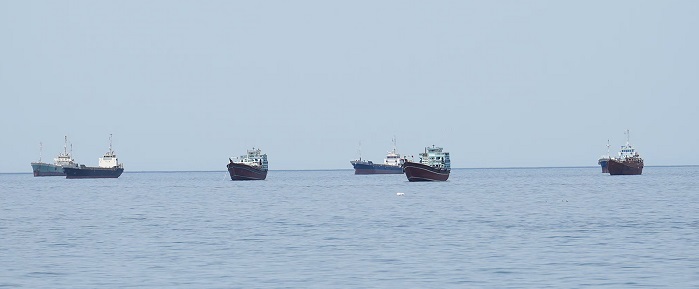
Dubai: A catastrophic humanitarian emergency is unfolding in the Arabian Gulf, where approximately 20,000 seafarers remain trapped aboard vessels amidst a tightening naval blockade and escalating military threats. According to a report by CNN, the United Nations has sounded the alarm over an "unprecedented" crisis triggered by the effective closure of the Strait of Hormuz, leaving maritime workers, many from poor, developing countries, marooned in a high-stakes geopolitical tug-of-war.
These workers are currently wedged between aggressive commercial pressure from shipowners and the lethal reality of security threats from drones and sea mines, all while navigating limited legal protections.
The scale of the disruption has stunned international regulators and laid bare the severity of the situation facing the crews.
Damien Chevallier, director of the Maritime Safety Division at the UN's International Maritime Organisation (IMO), told CNN that the situation is unlike anything the industry has previously encountered.
"It is an unprecedented situation," Chevallier remarked. "We have around 20,000 seafarers in the Gulf for now close to eight weeks. It is a humanitarian crisis. We have never faced such a situation."
The paralysis is total, as Iranian ports pose war-zone risks, while visa restrictions and logistical hurdles along the Arab states lining the Gulf's southern shores make it difficult for many sailors to leave their vessels.
The geopolitical standoff has seen Iran attempt to implement navigation rules for "friendly" countries in exchange for fees, a move met by a Trump administration naval blockade targeting ships entering or leaving Iranian ports.
This clash has brought traffic through the strategic chokepoint to a near halt, and Chevallier informed CNN that "around 800 to 1,000 vessels would like to sail through the Strait of Hormuz to evacuate the area."
Among these is the Auroura, a sanctioned oil tanker linked to Iran's shadow fleet of vessels used to transport oil in defiance of American sanctions.
The plight of the Auroura's all-Indian crew highlights the worsening conditions onboard, including shortages of food and fresh water.
Manoj Yadav, a union organiser with the Forward Seamen's Union of India, told CNN at the time that the "crew is facing shortages of basic supplies," adding that "they want to go back home. The situation on this vessel is not good."
The International Transport Workers' Federation (ITF) suggests the issue goes beyond simple logistical delays, with widespread reports of "repatriation" being replaced by "abandonment," leaving some seafarers unpaid for nearly a year.
Intimidation from desperate shipowners has become a secondary threat to those stranded.
Mohamed Arrachedi of the ITF told CNN that "there are a lot of cases of intimidation. Some shipowners just get furious," noting cases where seafarers are "verbally threatened."
In the case of the Auroura, the owner allegedly accused the crew of "hijacking his vessel... sabotaging his vessel" when they requested to leave.
These sailors later reported to the United Kingdom Maritime Trade Operations (UKMTO) that they were "effectively stranded onboard under unsafe conditions," a fear realised when the ship was struck by drones while anchored off the UAE.
While some members of the Auroura crew eventually managed to fly home via Oman, thousands of others remain in peril.
Captain Isdik Alam, stationed on another stranded vessel, described a harrowing existence to CNN, where crews are "collecting water from the air-conditioning drains just to wash and survive."
Reflecting on a profound sense of abandonment, Alam noted that regardless of political outcomes, the human cost is being ignored.
"I am not a warrior. I am a seafarer," he said. "I'm not scared of the sea... I'm scared of missiles and attacks."