Saturday 25 / April / 2026
Muscat: Sultan Qaboos University has registered two patents for the year 2026 with the United States Patent and Trademark Office, with contributions from the university’s Innovation and Technology Transfer Center.
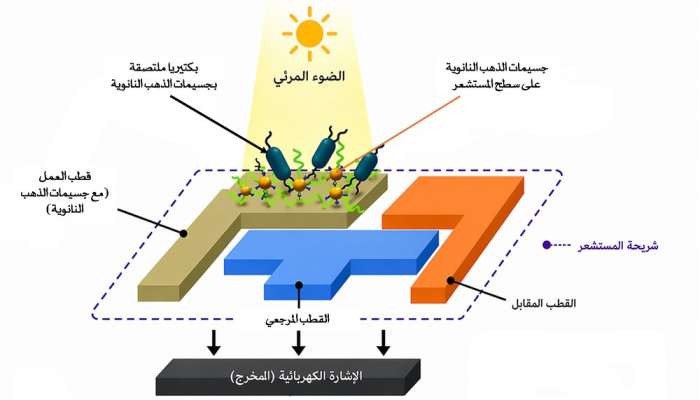
The first patent is for a portable sensor designed for the rapid detection of harmful pathogens, including bacteria, in food and water. The device was developed by a team of academics and researchers from the Nanotechnology Center in collaboration with the Physics Department at the College of Science.
The innovation was developed by Dr. Htet Htet Kyaw, Dr. Myo Thi Zar Myint, Dr. Mohammed bin Zahir Al Abri, and Dr. Salem bin Hamoud Al Harthy, reflecting interdisciplinary collaboration that drives impactful solutions addressing urgent needs in public health, food safety, and environmental monitoring.
Harmful pathogens—including bacteria, viruses, fungi, and parasites—are commonly found in fruits, vegetables, processed foods, raw meat, and surface water. Consuming contaminated food or water can lead to serious illnesses. Bacteria, in particular, remain among the most common causes of infection and continue to pose a major risk to human health.
The significance of this innovation is particularly evident in Oman, where rapid detection technologies can support national priorities related to food safety, water quality, public health, and environmental protection. The sensor is portable and easy to use, making it especially valuable in situations requiring quick decision-making, such as field inspections, remote locations, and routine monitoring.
Due to its compact size and simple design, the sensor could potentially be integrated into mobile devices in the future, enabling its use as a personal rapid detection tool. This opens the door to broader applications and highlights the potential of scientific research in Oman to contribute to future technologies.
The second patent represents an Omani biotechnological innovation in sustainable microbial agricultural media, developed by Dr. Hamad bin Hamoud Al Nadabi, a researcher at the Environmental Studies and Research Center at Sultan Qaboos University.
This patent marks a significant step toward developing innovative and sustainable biological solutions through the introduction of a new microbial culture medium derived from dates and marine algae. It serves as a practical and cost-effective alternative to conventional media used for cultivating microorganisms.
The concept utilises date powder as a natural nutrient source rich in compounds that support microbial growth, alongside agar extracted from marine algae to provide the gelling function necessary for forming a solid medium suitable for growing fungi and microbes.
The strategic value of this innovation lies in its reliance on locally available resources in Oman, including Mabsali dates and a native type of marine algae. This contributes to reducing dependence on imported materials, lowering production costs, and strengthening local value chains in research, development, and biotechnology.
The innovation also reflects a progressive approach toward the circular economy by leveraging local natural resources to produce laboratory materials with high scientific and commercial value.
This patent is part of a broader research and applied innovation pathway, representing one of several promising outputs aimed at transforming scientific knowledge into practical, scalable, and investable solutions. It reinforces the national value of scientific research and innovation in Oman.
Notably, the patented innovation is linked to a research project titled “Development of new formulations of local microorganisms for use in biological control against plant diseases.” The project is funded by the Strategic Research Grant Program at Sultan Qaboos University, which has helped create a supportive scientific environment for achieving this milestone and paving the way for further high-impact scientific, developmental, and economic outcomes.