Saturday 13 / June / 2026
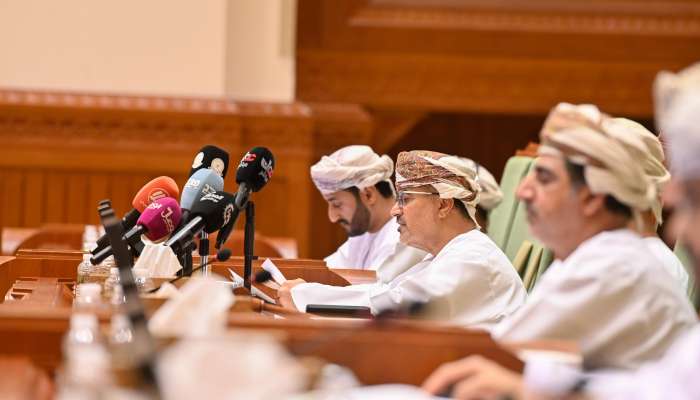
Muscat: His Excellency Said bin Hamoud Al Maawali, Minister of Transport, Communications and Information Technology, addressed the Shura Council to review the significant advancements across the Sultanate's strategic sectors. The report highlighted a period of robust growth and high-quality investment, specifically noting that the space sector is gaining momentum with investments reaching OMR 74 million and 25 active companies. Key milestones include the launch of a test rocket from Duqm and the signing of the Omani satellite project, while private sector investment in artificial intelligence and advanced technologies has exceeded OMR 79 million, supporting 22 specialised startups.
The logistics and ports sector witnessed a 17.4 per cent increase in revenues by 2025, with cargo handling exceeding 143 million tonnes and container handling reaching 5.1 million TEUs. Investment in this sector is projected to reach approximately OMR 3.3 billion during the Tenth Five-Year Plan, supported by 18 investment agreements signed in 2025 valued at over OMR 100 million. Furthermore, the Omanisation rate in the logistics field has risen to 21.6 per cent, as the Ministry continues to focus on enhancing the efficiency and integration of the national system.
Oman has made a qualitative leap in government digitisation, rising to 41st place globally in the 2024 e-Government Development Index. This transformation involved simplifying 3,166 government services and digitising 2,277 permits, resulting in 48 million digital transactions by 2025—an increase of nearly 78 per cent. The e-commerce market is similarly projected to reach approximately OMR 288 million by 2025, with over 14,000 business licenses issued. The financial technology sector is also seeing rapid evolution, marked by a 703 per cent increase in non-cash transactions and the licensing of 10 payment system companies.
Telecommunications coverage has reached near-total saturation, with mobile broadband at 99 per cent and fixed high-speed broadband at 100 per cent via fibre optics, 5G, and satellites. In terms of human capital, more than 11,000 national talents have been trained, with the percentage of Omanis in technical and leadership roles within the IT sector rising to 69 per cent. The digital economy, which contributed OMR 800 million in 2023, is targeted to reach OMR 1.5 billion by 2030, with plans to attract OMR 300 million in foreign technology investments and create 14,000 new jobs.
Infrastructure development remains a priority, with strategic road projects worth over OMR 1.2 billion currently underway across various governorates. These encompass more than 60 projects focused on constructing new routes and rehabilitating existing ones that have reached the end of their service life. Looking ahead, the Eleventh Five-Year Plan will focus on completing ongoing projects, many of which are already 70 per cent complete, while land transport revenues are projected to grow by 18 per cent in 2025 as public bus ridership exceeds 5 million passengers.