Saturday 28 / February / 2026
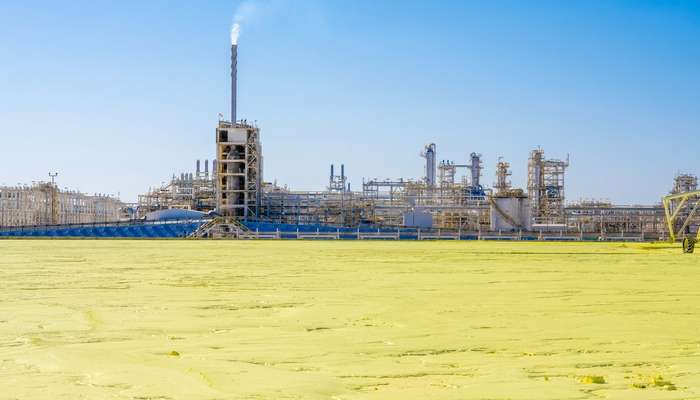
Muscat: Sultanate of Oman produces on a regular basis about 240 tonnes of Sulphur per day that ensures the continuity of its industrial use.
Sulphur production is linked to gas processing operations at a number of Petroleum Development Oman (PDO) facilities, most notably the Jebel Khuff station and the Taysir area, where Sulphur is recovered as a by-product of desalination operations. These sites are an important hub for sour gas management and enhancing operational efficiency.
Sulphur is of great industrial importance due to its multiple uses; it is a key component in the manufacture of phosphate fertilizers, industrial chemicals, and the paper and pulp industry, in addition to its role in the steel industry, metal refining, and the production of batteries and dyes.
Investing in locally produced Sulphur contributes to supporting industrial supply chains and reducing dependence on imports, in addition to achieving financial returns that strengthen the national economy as its production operations expand.
The Ministry of Energy and Minerals continues its efforts to maximise the benefit from the resources associated with oil and gas production operations, starting from turning operational challenges into economic and industrial opportunities.
Hydrogen sulfide gas is one of the most prominent of these challenges due to its high toxicity and environmental impacts. It accompanies the production of heavy oil and natural gas and requires treatment to ensure the safe operation of facilities. Through the application of advanced technologies in gas desalination, it has become possible to convert this gas into an important industrial resource in the form of Sulphur, which supports value chains in the chemical industries and enhances revenues.
Dr. Salah bin Hafeez Al-Dhahab, Director General of Investment at the Ministry of Energy and Minerals, confirmed that the move towards marketing raw Sulphur comes in line with the Ministry’s efforts to make optimal use of natural resources in the Sultanate of Oman, and to transform the resources associated with production operations into economic opportunities with added value.
He told the Oman News Agency that managing production operations is not limited to operational aspects only, but has become based on maximising economic returns from available resources, which contributes to supporting economic diversification and enhancing non-oil revenues.
The Director General of Investment at the Ministry of Energy and Minerals pointed out that the experience of recovering and producing Sulphur began in limited areas within gas processing facilities, and achieved positive results at the operational and economic levels.
He indicated that the Ministry hopes during the coming period to enter new fields that will expand the scope of Sulphur exploitation, which will enhance the related manufacturing industries in the Sultanate of Oman and raise the efficiency of exploiting the resources associated with the oil and gas sectors.
Regarding industrial technologies for Sulphur production, hydrogen sulfide is removed through advanced desalination processes, most notably the Claus process, which is the most common technology for Sulphur recovery. The process begins by separating the gas using amine solutions or physical solvents.
Then, partial oxidation is carried out by burning part of the gas to produce Sulphur dioxide. After that, the remaining hydrogen sulfide reacts with the sulfur dioxide in the presence of a catalyst to form elemental Sulphur, which is condensed and collected in liquid form in preparation for its use or transport. This process allows for the reduction of harmful emissions and the conversion of a dangerous by-product into a raw material of high economic value.
The Ministry of Energy and Minerals launched an initiative to issue a tender to find sustainable solutions for managing and utilising stored Sulphur. After evaluating the bids, the project was assigned to the "Green Fertilizers" company, which will handle the accumulated quantities and invest in the current production within an integrated industrial system.
The Green Fertilizers Company is working on establishing a modern fertilizer production plant in the industrial area of Ibri State, with a production capacity of up to 400 tonnes per day. The project is expected to contribute to meeting the needs of the local market for agricultural fertilizers, while exporting the surplus to foreign markets.
The company is also considering developing additional products that enter vital areas such as oil refining and tyre manufacturing, which enhances the diversification of sulfur-related industries and increases its economic value.
The exploitation of hydrogen sulfide and its conversion into Sulphur is a practical example of the circular economy approach in the energy sector, where a hazardous by-product is transformed into an industrial resource that supports economic development and promotes environmental sustainability.
The Ministry continues its efforts to develop this system in accordance with best global practices, in order to achieve a balance between safety, environmental protection and maximising its impact on local content, and to enhance the Sultanate of Oman’s position as a promising regional centre in industries related to energy and natural resources.