Saturday 28 / February / 2026
Muscat– Over the past five years, the Sultanate of Oman has pressed ahead with a comprehensive reform agenda that has reshaped its business environment, strengthened competitiveness and delivered measurable progress across key economic indicators, in line with the objectives of the Oman Vision 2040 strategy.
Economic data for the period 2020–2024 shows robust growth in non-oil foreign trade, with non-oil exports rising from OMR3.4 billion to OMR6.2 billion — a growth rate of 21.9 percent. The increase reflects sustained government efforts to diversify income sources, expand the production base and open new markets for Omani products through trade promotion programmes and regional and international partnerships.
Mubarak bin Mohammed Al-Duhani, Director General of Planning at the Ministry of Commerce, Industry and Investment Promotion, said the achievements recorded between 2020 and 2025 underscore the effectiveness of strategic planning aligned with Oman Vision 2040.
He noted that growth in non-oil exports, rising added value in manufacturing and the doubling of foreign direct investment stock were driven by integrated financial, legislative and digital policies.
National accounts data shows that the value added of manufacturing industries increased from OMR 2.4 billion in 2020 to OMR 4.1 billion in 2024, while wholesale and retail trade grew from OMR2.6 billion to OMR3.3 billion, enhancing supply chain efficiency and commercial activity.
On the investment front, Khalid Hamad Al Kharousi, Director General of Investment Promotion at the ministry, said total cumulative foreign direct investment rose from OMR14.2 billion in 2020 to nearly OMR30 billion in 2024, and exceeded OMR30.9 billion by the end of the third quarter of 2025 — a 16.2 percent increase compared to the same period in 2024.
Foreign investment in manufacturing alone reached OMR 2.7 billion by the end of Q3 2025.
Investment promotion efforts have targeted strategic sectors including manufacturing, renewable energy, advanced technologies and the circular economy, supported by the activation of the “Invest in Oman” platform and expanded international engagement.
Oman’s progress has also been reflected in global benchmarks.
The Sultanate improved its ranking in the Index of Economic Freedom from 76th place in 2020 to 58th in 2025, while advancing in the Global Innovation Index from 84th to 69th place during the same period, driven by regulatory reforms and digital transformation initiatives.
Digital transformation has been central to reform efforts. The ministry now operates nine integrated electronic platforms serving investors and entrepreneurs, including “Oman Business,” “Invest in Oman,” “Oman Exports,” “Made in Oman,” “Ma’roof Oman,” “Hazm,” and “Sanad Centres.” The maturity rate of electronic services on the Oman Business platform rose to 72 percent in 2024, compared to 50 percent in 2020.
Between 2020 and 2025, more than 700,000 automatic licenses were issued, over 2.8 million electronic transactions were executed, and around 446,000 active commercial records were registered. Completed industrial licenses exceeded 103,900, while total transactions during the five-year period surpassed 3 million.
Nasra bint Sultan Al-Habsi, Director General of Trade at the ministry, said the growth in commercial registrations and e-commerce licenses reflects market vitality and confidence in the regulatory framework.
Active e-commerce licenses reached 9,637, alongside 929 licenses for social media marketing activities.
The National E-Commerce Plan (2022–2027) achieved 83 percent completion by 2025, up from 46 percent in 2023.
Legislative modernisation has accompanied this transformation. The ministry issued 49 regulatory decisions covering e-commerce, marketing practices, product identity licensing, quality marks and foreign investment activities, enhancing transparency and governance.
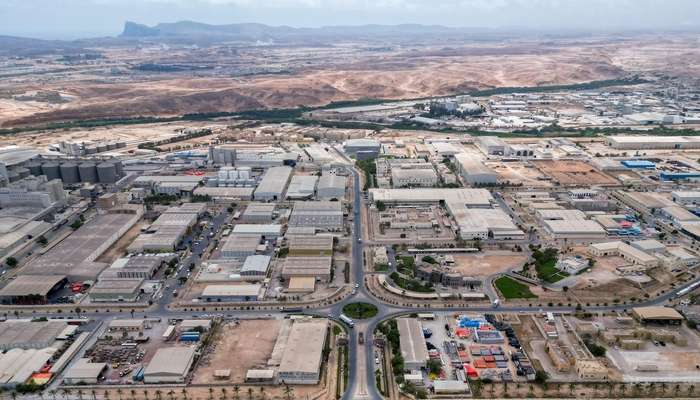
In the industrial sector, implementation of the Industrial Strategy 2040 continued to yield results. By the end of 2025, manufacturing industries contributed OMR3.879 billion to GDP, up 7.2 percent from 2024. Industrial foreign investment rose to OMR3.49 billion in 2025, marking a 24.6 percent increase year-on-year.
Employment in the sector grew to approximately 248,000 workers.
Non-oil exports reached OMR6.885 billion in 2025, up 10.5 percent from 2024. The number of establishments holding the national product identity certificate reached 166 by the end of 2025.
In quality and standards development, Emad bin Khamis Al-Shukaili, Director General of Standards and Metrology, highlighted efforts to strengthen the national quality system through international cooperation and expanded conformity services. During 2025, more than 135,000 electronic conformity certificates were issued, alongside 166 national conformity certificates and over 2,000 energy efficiency labels.
The Sultanate signed memoranda of understanding with Bahrain, India, Belarus and Tunisia in areas related to precious metals and conformity systems, while enhancing participation in international standardization organisations.
In competition protection, Ahmed Salem Al-Rasbi, Director General of the Competition Protection and Monopoly Prevention Centre, said automation of services and sectoral studies have strengthened transparency and reduced unjustified market concentration, reinforcing a fair and competitive investment environment.
Collectively, these achievements reflect Oman’s steady progress toward building a diversified, knowledge-based and competitive economy grounded in modern legislation, digital transformation, industrial growth and sustainable investment flows.