Saturday 10 / January / 2026
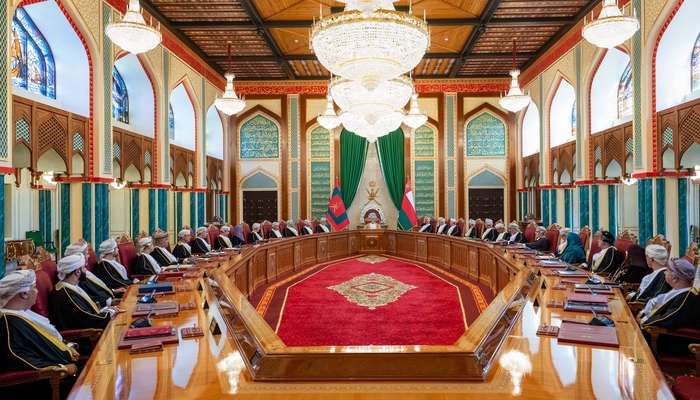
Muscat: The supreme directives of His Majesty Sultan Haitham bin Tarik to the Council of Ministers to study and diagnose behavioural changes in society constitute a comprehensive national roadmap aimed at safeguarding values and preserving social cohesion and national identity, particularly in light of the rapid expansion of modern technologies and social media platforms.
Specialists and stakeholders told Oman News Agency that the royal directives respond to an urgent societal need created by contemporary technological transformations, stressing that developing clear and well-governed policies for digital behaviour will strengthen society’s ability to confront negative phenomena such as the weakening of family ties and the decline of positive role models in the digital sphere.
Social researcher Mubarak bin Khamis Al-Hamdani stated that Omani society is undergoing a significant phase of social transformation driven by openness to global cultures, the shift toward virtual communication, and evolving economic and governmental policies that encourage broader participation in development. He emphasized that economic growth and financial sustainability cannot be achieved without a cohesive and stable society supported by parallel social policies.
Al-Hamdani pointed out that recent years have witnessed emerging social phenomena, including the erosion of family dialogue, the decline of authentic local role models, and the spread of behaviors such as bullying, harassment, and unhealthy comparisons driven by digital platforms. He stressed the importance of establishing an integrated social monitoring system capable of anticipating societal challenges, alongside activating the role of media, educational, religious, and civil society institutions in promoting values-based content and positive role models.
For her part, Dr. Ruqaya bint Hamid Al-Wahibiya, Head of the English Department at the Vocational College in Saham, affirmed that behavioral change has become a tangible reality reflected in language, daily interactions, and the formation of role models among younger generations. She noted that social media has reshaped the concept of the role model from one rooted in consistent behavior and responsibility to an image consumed through digital platforms.
Dr. Al-Wahibiya stressed that addressing this transformation requires awareness rather than mere control, calling for policies that promote value-based digital content, media literacy, and partnerships with influential figures who embody authentic societal values. She highlighted that Omani society possesses rich and enduring role models rooted in its heritage and demonstrated through national solidarity and balanced discourse during times of crisis.
Meanwhile, Nasser bin Khalfan Al-Badi, a religious preacher at the Ministry of Endowments and Religious Affairs, underscored that virtuous values and ethical behavior represent a fundamental pillar of national stability and a key driver of development. He noted that His Majesty’s directives align with the objectives of Oman Vision 2040, particularly the priorities of citizenship, identity, heritage, and national culture.
Al-Badi emphasized the role of religious institutions in renewing their discourse through modern tools and digital platforms, highlighting the need for integrated efforts among religious, educational, cultural, youth, and media institutions. He called for the development of a comprehensive strategy, supported by measurable indicators, to preserve values and strengthen social cohesion in line with national aspirations.