Wednesday 09 / September / 2026
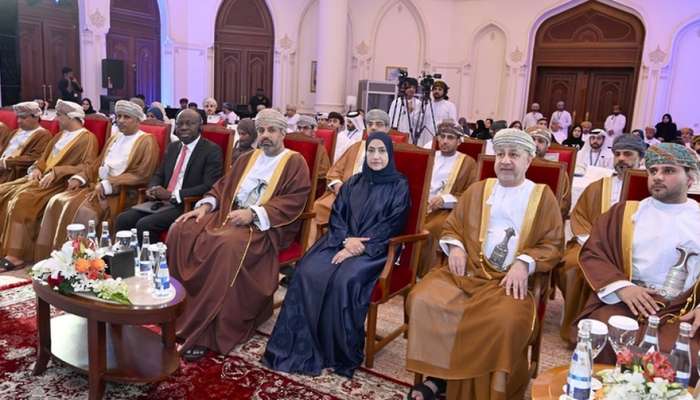
Muscat--- An expanded regional workshop titled "International Labour Standards: Building Local Policies and Capacities" began today in Muscat.
The 4-day event is organized by the Ministry of Labour with the participation of experts from the International Labour Organization (ILO) and a number of specialists and officials from government entities and the private sector in the Sultanate of Oman and regional countries.
The opening of the workshop was held under the patronage of Dr. Mahad Said Ba'owain, Minister of Labour.
The workshop aims to support the alignment of national legislation with international standards, enhance institutional capacities for devising labour policies, raise awareness of the role of tripartite constituents (government, employers, and workers), and exchange regional expertise to build sustainable cooperation networks that contribute to developing the work environment and enhancing social protection.
Khalid Salim Al Ghammari, Undersecretary of the Ministry of Labour for Labour Affairs, stated in a speech that organizing this workshop comes at a time the world is witnessing rapid transformations in employment patterns, the nature of professions, and labour relations. This, he said, has resulted in growing challenges that require policymakers to have an integrated and balanced understanding that achieves harmony between the requirements of economic growth, the protection of rights, and the development of work environments. He pointed out that international labour standards represent the fundamental reference framework for achieving comprehensive and sustainable development.
For his part, Gilbert Houngbo, Director-General of the International Labour Organization (ILO), affirmed that organizing this program in cooperation with the ILO Regional Office for Arab States, the International Training Center, and the International Labor Standards Department reflects the importance of rights-based, dialogue-driven, and excellence-oriented modernization. He explained that international labour standards, established since the organization's founding in 1919, represent a cornerstone for social justice, stability, and economic prosperity.
He noted that this program is the first of its kind in the region, reflecting a growing awareness of the importance of international standards in achieving national aspirations, enhancing economic competitiveness, and cementing social cohesion. He emphasized that commitment to fundamental principles and rights at work is gaining increasing momentum in the region, especially in the fields of social dialogue, the fight against forced labour, and occupational safety and health.
On his turn, Faisal Abdullah Al Rowas, Chairman of the Board of Directors of Oman Chamber of Commerce and Industry, indicated that the workshop seeks to develop the legislation and regulations in force in the Sultanate of Oman. It also enhances the partnership among the tripartite constituents and aims to review challenges and explore solutions, he added.
Meanwhile, Nabhan Ahmed Al Battashi, Chairman of the Board of Directors of the General Federation of Oman Workers, clarified that operational policies must always evolve to keep pace with rapid economic changes, noting that the Sultanate of Oman continues to change these policies. He pointed out that the ILO's participation in this workshop reflects Oman's commitment to international standards and conventions.
The workshop features an intensive training programme that includes specialized presentations and expanded discussion sessions addressing mechanisms for preparing national policies compatible with international standards, improving the institutional governance of the labour market, and the role of social dialogue in supporting compliance and transparency. This is in addition to reviewing regional and international experiences and best practices in the fields of occupational safety and health.
Participants emphasized the importance of activating the workshop's outcomes and building upon them to develop the national work environment, and to enhance institutions' ability to adopt advanced policies that support sustainable economic and social development in the Sultanate of Oman.
It is worth mentioning that the workshop comes within the framework of the strategic partnership linking the Sultanate of Oman with the International Labour Organization, which has yielded tangible achievements in the fields of decent work, legislative updates, capacity building, and the enhancement of social protection, in line with Oman Vision 2040.