Wednesday 12 / August / 2026
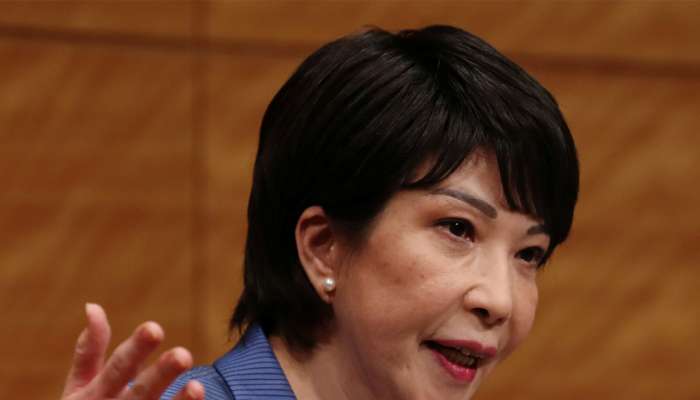
New Delhi: Japanese Prime Minister Sanae Takaichi will visit India from July 1 to 3 for an annual bilateral summit between the countries, India's foreign ministry said on Friday.
Japan is set to deepen its economic engagement with India’s northeastern region through a high-profile visit by Prime Minister Sanae Takaichi to Assam in early July. The visit will be accompanied by executives from more than 50 Japanese companies and organizations exploring investment and business opportunities in the state.
The delegation is expected to include representatives from major Japanese corporations such as Suzuki Motor Corporation, Itochu Corporation and Toyota Tsusho Corporation. Several firms are reportedly preparing to sign cooperation agreements during the visit, highlighting growing interest in Assam’s emerging industrial potential.
Assam’s capital, Guwahati, is expected to host key meetings and business forums aimed at strengthening commercial and industrial cooperation between Japan and India. The visit reflects the two countries’ broader commitment to building a “Free and Open Indo-Pacific” through deeper economic and strategic collaboration.
The initiative aligns with a vision first outlined by former Japanese Prime Minister Fumio Kishida in 2023, which proposed the development of an industrial corridor linking the Bay of Bengal with northeastern India. Both governments are now seeking to transform that concept into tangible infrastructure and investment projects.
Although Assam still faces infrastructure challenges compared with more developed regions of India, it is increasingly attracting attention from international investors. According to Japan’s Foreign Ministry, 59 Japanese corporate offices were operating in Assam as of 2024, primarily in the finance and insurance sectors. However, growing investments by major Indian conglomerates are helping position the state as a future industrial hub.
Among the most significant projects is a semiconductor facility being developed by Tata Group. The company is investing 270 billion rupees (about $2.86 billion) in a plant focused on semiconductor assembly, packaging and testing operations. The project is expected to create opportunities for suppliers of advanced manufacturing equipment and logistics services.
Other Indian business giants are also expanding their footprint in the state. Reliance Industries has announced investments in data centers and digital infrastructure, while Adani Group is planning major investments in power generation and related infrastructure.
Japanese companies view these developments as opening new avenues for participation in Assam’s industrial growth. Demand is expected to rise for specialized Japanese technologies, including precision manufacturing equipment and advanced transportation systems capable of handling sensitive semiconductor components.
The growing focus on Assam also reflects India’s broader strategy for northeastern development under Prime Minister Narendra Modi. Bordering both Myanmar and Bangladesh, the region is increasingly being seen as a strategic gateway connecting Southeast Asia with the Indian Ocean, potentially transforming it into a key center for trade, manufacturing and logistics in the years ahead.