Sunday 24 / May / 2026
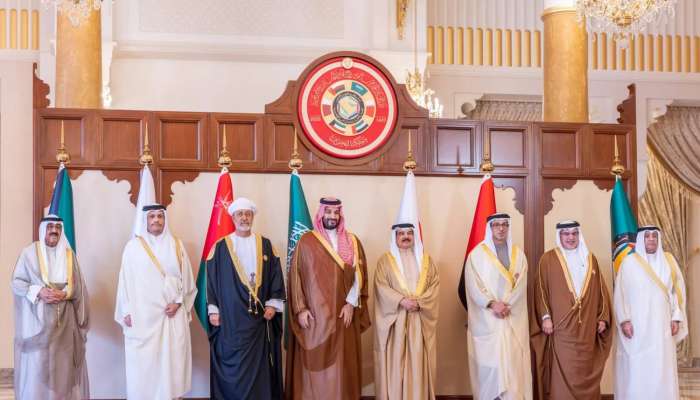
Muscat: The Gulf Cooperation Council (GCC) states will celebrate tomorrow “Monday” the 45th anniversary of the Council's founding, as they continue to solidify their standing as an influential economic and developmental force at both regional and global levels, driven by performance indicators that reflect the robustness of their economies and the depth of their integration across various sectors.
Data issued by the Gulf Statistical Centre show that the current gross domestic product (GDP) of the GCC states reached approximately USD 2.4 trillion in 2025, positioning the Council's economies among the world's influential economic powers. Meanwhile, the non-oil sector's contribution exceeded 78%, with non-oil GDP growth reaching 5.3% during the same year—a clear indication of the success of economic diversification pathways in the GCC states.
In the financial sector, the GCC states continued to enhance their financial stability, with commercial bank assets reaching approximately USD 3.9 trillion, registering growth of 11.9% between 2024 and 2025. Bank deposits reached USD 2.3 trillion, with a growth rate of 10.6%, reflecting strong banking liquidity and growing confidence in the Gulf financial sector.
Indicators also confirm the growing weight of Gulf investments globally, with the assets of Gulf sovereign wealth funds reaching approximately USD 5 trillion, representing 30.3% of total sovereign funds worldwide, thereby strengthening the GCC states' presence in international markets and investments.
In trade, the GCC states recorded a total trade volume of USD 1.6 trillion in 2024, a growth of 7.4% compared to 2023, while Gulf merchandise exports reached approximately USD 849.6 billion, reflecting the continued strong Gulf presence in global trade and international supply chains.
In the energy sector, the GCC states maintained their pivotal position in the global energy market, with oil production of 16.6 million barrels per day, accounting for approximately 22.2% of global crude oil production.
Global competitiveness indicators for 2025 also show notable progress by the GCC states. The Council ranked 15th globally in the overall index, 8th globally in the tax policy index, and 11th in the public finance index, in addition to achieving advanced positions in indices for labour market, infrastructure, business efficiency and governance.
At the level of Gulf integration, the Gulf Common Market recorded continuous growth in 2025, with intra-GCC trade reaching approximately USD 146 billion, a growth of 85.2% compared to 2012. Meanwhile, the total capital of joint-stock companies rose to USD 549 billion, exceptional growth of 237.6% compared to 2007.
The GCC states also witnessed growing social mobility, evidenced by the movement of more than 41.4 million Gulf citizens among member states, an increase in the number of Gulf students studying in government schools of other member states to 43,200 students, in addition to approximately 488,900 Gulf citizens benefiting from cross-border healthcare services—a clear manifestation of the depth of Gulf social cohesion and developmental integration.
In the tourism sector, Gulf tourism revenues reached approximately USD 132.3 billion, reflecting the growing appeal of Gulf destinations and their capacity to attract global tourist traffic.
On the political front, the GCC states continued to strengthen their regional and international presence by adopting unified positions on regional and international issues, intensifying efforts to support security and stability, and reinforcing the principles of dialogue and joint cooperation. This has contributed to enhancing the Council's standing as an active and influential partner in shaping political and economic balances regionally and globally, in addition to its role in supporting development and peace pathways and strengthening strategic relations with countries worldwide.
It is noteworthy that the Gulf Cooperation Council was established on 25 May 1981, with the aim of enhancing cooperation, integration, and interconnection among member states across various fields, achieving development, stability, and prosperity for their peoples, and strengthening their regional and international position.