Saturday 14 / March / 2026
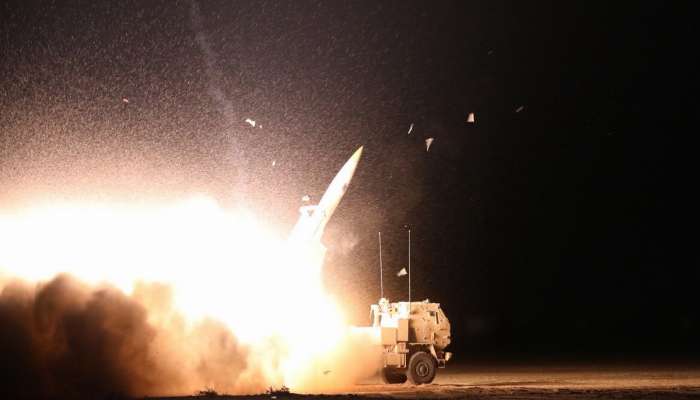
In moments of major geopolitical upheaval, states are often forced to reveal the contradictions embedded in their foreign policies. The widening war involving Iran, the United States and Israel has done precisely that for Pakistan.
What began as a distant confrontation in West Asia has rapidly evolved into a strategic dilemma for Islamabad, exposing the fragility of its regional balancing act.
The conflict escalated dramatically after US–Israeli strikes killed Iran’s Supreme Leader, Ayatollah Ali Khamenei, triggering Iranian retaliation across the region.
Missile and drone strikes soon targeted multiple Gulf states, including countries hosting American military facilities.
As the conflict expanded across the Arabian Gulf, the reverberations were felt immediately in Pakistan — that sits at the intersection of competing alliances.
Pakistan maintains longstanding strategic relations with Saudi Arabia, shares a sensitive border with Iran, and continues to rely heavily on security ties with the United States.
The sudden convergence of these relationships in the context of an escalating regional war has placed Islamabad under intense political, economic and security pressure.
Far from projecting diplomatic clarity, Pakistan now finds itself navigating a crisis shaped by conflicting commitments and regional mistrust.
A web of strategic commitments
At the centre of Pakistan’s dilemma lies its deep military and economic relationship with Saudi Arabia.
In September 2025, Islamabad and Riyadh formalised the Strategic Mutual Defence Agreement (SMDA), a pact signed by Prime Minister Shehbaz Sharif and Crown Prince Mohammed bin Salman.
The agreement commits both countries to treat aggression against one as aggression against both, creating a collective defence framework that analysts compare in principle to NATO’s Article 5.
This defence pact has acquired immediate relevance as Iranian missiles and drones have targeted Gulf states. Pakistani officials have openly acknowledged the constraints imposed by the agreement.
Deputy Prime Minister and Foreign Minister Ishaq Dar disclosed in March that he had reminded Iranian leadership of Pakistan’s defence obligations to Saudi Arabia during urgent diplomatic exchanges.
At the same time, Pakistan cannot treat Iran purely as a strategic adversary. The two countries share a 900-kilometre border stretching across the volatile province of Balochistan, a region already plagued by insurgency and cross-border militant networks.
Iran and Pakistan have experienced periodic tensions, including cross-border strikes in January 2024, but both sides maintain trade links and diplomatic engagement.
This geographic reality complicates Islamabad’s position. Any perception that Pakistan is siding militarily with Saudi Arabia against Iran could destabilise Pakistan’s western frontier and inflame domestic tensions.
Domestic unrest and public anger
The political fallout inside Pakistan has been immediate. Following Khamenei’s assassination, protests erupted across several cities, reflecting deep anger among sections of the public over Pakistan’s perceived proximity to Washington’s regional policies.
Demonstrations quickly escalated into violence in some areas. In Gilgit-Baltistan and Karachi, protestors attacked government and diplomatic facilities, including attempts to breach or set fire to buildings associated with the United States.
Authorities imposed curfews and deployed security forces after at least two dozen people were killed in unrest.
The protests underscored a broader mistrust of Pakistan’s ruling establishment, which critics accuse of aligning too closely with US initiatives in West Asia, including Washington’s diplomatic framework for post-war governance in Gaza. The unrest also highlighted the country’s deep sectarian sensitivities.
Pakistan’s Shia population — estimated at 15 to 20 percent of its 250-million citizens — has historically mobilised around developments involving Iran.
The death of Iran’s Supreme Leader therefore carried powerful symbolic resonance, amplifying the risk that regional tensions could spill into Pakistan’s domestic landscape.
Sectarian and security risks
The Iran conflict intersects dangerously with Pakistan’s long-standing sectarian fault lines.
Groups with ideological or organisational ties to Iran have operated inside Pakistan for years, including the Zainabiyoun Brigade — a Shia militia reportedly trained and funded by Iran’s Islamic Revolutionary Guard Corps.
Thousands of fighters from Pakistan were recruited into the militia during the Syrian civil war. Although Pakistan formally banned the group in 2024, analysts believe many of its networks remain intact.
Security experts warn that a prolonged confrontation between Iran and Gulf states could activate dormant militant networks inside Pakistan.
Such developments would further complicate Islamabad’s already volatile security environment, particularly in the northwestern districts and Balochistan province.
Sectarian violence has previously caused severe instability in Pakistan. In late 2024, more than 130 people were killed in clashes in Kurram district alone — a region known as a recruitment base for Shia militant groups.
These dynamics make the prospect of Pakistan being drawn into the Iran conflict particularly dangerous domestically. Any involvement could rapidly trigger sectarian mobilisation across the country.
Economic vulnerabilities
Beyond security concerns, the war also threatens Pakistan’s fragile economy. Millions of Pakistani workers are employed across Gulf states such as Saudi Arabia, the United Arab Emirates and Qatar.
Remittances from these workers constitute one of Pakistan’s most critical sources of foreign exchange.
A regional war that disrupts Gulf economies or energy infrastructure could therefore directly affect Pakistan’s financial stability.
Analysts have warned that prolonged conflict may push global energy prices higher, placing additional strain on Pakistan’s already fragile balance of payments.
Pakistan’s economic dependence on the Gulf further complicates its strategic calculations. Maintaining stable relations with Saudi Arabia and other Gulf monarchies is essential not only for political reasons but also for sustaining remittance flows and energy supplies.
Diplomatic contradictions
Pakistan’s response to the crisis has exposed the contradictions within its foreign policy.
Within hours of the US–Israeli strikes that killed Khamenei, Islamabad condemned the attacks as “unwarranted.” Yet it also criticised Iran’s retaliatory missile strikes on Gulf states as violations of sovereignty.
This dual condemnation reflected Pakistan’s attempt to maintain neutrality while protecting its competing strategic relationships. But the balancing act has appeared increasingly strained as the conflict escalates.
Meanwhile, Pakistan’s military leadership has intensified coordination with Saudi Arabia.
Field Marshal Asim Munir travelled to Riyadh soon after Iranian missiles targeted the kingdom, meeting Saudi Defence Minister Prince Khalid bin Salman to discuss the situation within the framework of the bilateral defence pact.
Such engagements highlight how deeply Pakistan is embedded within Saudi Arabia’s security architecture, even as Islamabad attempts to maintain diplomatic ties with Tehran.
A strategic tightrope
Pakistan’s predicament illustrates the risks of maintaining overlapping strategic alignments in a volatile region.
For decades, Islamabad cultivated relationships with Washington, Riyadh and Tehran simultaneously, leveraging each partnership for security or economic advantage.
The Iran war has exposed the limits of that approach. As the conflict expands, Pakistan faces growing pressure to clarify its position — a decision that carries serious geopolitical and domestic consequences.
The stakes are particularly high given Pakistan’s simultaneous tensions with Afghanistan and persistent insurgency in Balochistan.
Adding another front to an already complex security environment would stretch the country’s resources and political stability.
For now, Islamabad continues to rely on diplomacy and back-channel communication in an attempt to navigate the crisis. But the widening regional war has already demonstrated how fragile Pakistan’s balancing strategy has become.
As missile strikes intensify across the Persian Gulf and tensions rise along multiple fronts, Pakistan’s strategic contradictions are no longer abstract policy challenges. They have become immediate pressures that could reshape the country’s regional posture — and test the resilience of its already strained political system.