Monday 24 / August / 2026
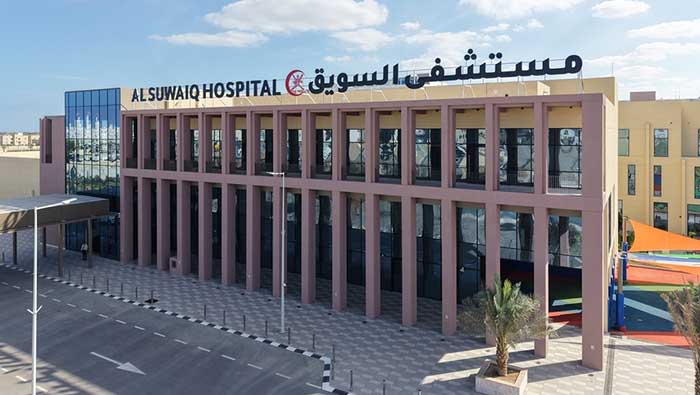
Muscat: The health sector in the Gulf Cooperation Council (GCC) countries is witnessing a significant expansion, reflecting the volume of government investment and the development of health infrastructure in recent years.
Data from the GCC Statistical Centre indicates clear growth in health facilities and services provided to all segments of society.
By the end of 2024, the total number of hospitals reached approximately 882, an increase of 176 hospitals during the 2014–2024 period, driven by both public and private investment.
According to the report issued by the GCC Statistical Centre, the total number of hospital beds reached 127,600, with government-owned beds accounting for 73% of that total.
Furthermore, the total number of government health centers and complexes reached approximately 3,400 facilities in 2023. This reflects the expansion of primary and specialised care services and their geographical distribution to meet the needs of the population.
Hospital bed capacity recorded notable growth, rising to 124,900 beds in 2022, compared to 111,200 beds in 2018, representing an average annual growth rate of 2.4 percent.
The healthcare workforce remains the cornerstone of any sustainable health system. Nursing staff constitute the largest share at 39.3 percent, with 57.5 percent of healthcare personnel concentrated in government facilities.
The private sector has recorded higher growth rates in the number of physicians, nurses, and pharmacists compared to the government sector, exceeding global averages for healthcare workforce indicators per 10,000 population.
The total healthcare workforce reached 1.05 million professionals, with an annual growth rate of 6.8 percent. Between 2019 and 2024, the number of physicians reached approximately 203,100 doctors, while the number of pharmacists stood at around 78,700 pharmacists. Nursing staff represented the largest category, with approximately 411,900 nursing personnel.
Private hospitals accounted for 42 percent of the total number of hospitals and recorded faster growth compared to government hospitals. The average number of hospital beds reached 20.8 beds per 10,000 population, exceeding the global average, with private hospital bed capacity growing at a faster pace than that of public hospitals.
Indicators also show an increase in outpatient visits, surgical operations, diagnostic tests, and inpatient admissions, reflecting rising demand for healthcare services and improved accessibility. The expansion in hospitals and healthcare facilities continues across most GCC countries, with some states recording the highest annual growth rates in capacity.
The digital health sector is also experiencing rapid growth, driven by the adoption of modern technologies such as electronic health records, tele-medicine, artificial intelligence, big data analytics, wearable devices, and the Internet of Medical Things (IoMT). These advancements contribute to improving service efficiency, enhancing quality of care, and strengthening responsiveness to health emergencies.
Forecasts indicate continued growth in the digital health market, with revenues expected to reach $1.83 billion in 2025, while total healthcare spending is projected to reach $159 billion by 2029, with a compound annual growth rate (CAGR) of 7.8 percent.
Healthcare policies across GCC countries align with their long-term national visions, focusing on the financial sustainability of health systems, improving service quality and efficiency, strengthening public-private partnerships, nationalising healthcare professions, advancing digital transformation, and fostering health innovation. International indicators show that GCC countries are making tangible progress in social progress, global prosperity, human development, and life expectancy at birth.
Collectively, these indicators demonstrate the integrated development of the GCC healthcare system in terms of infrastructure, human resources, and service delivery — enhancing the capacity of health systems to address population growth and future challenges, and reaffirming continued investment in the healthcare sector as a key pillar of human development and sustainability across GCC countries.